

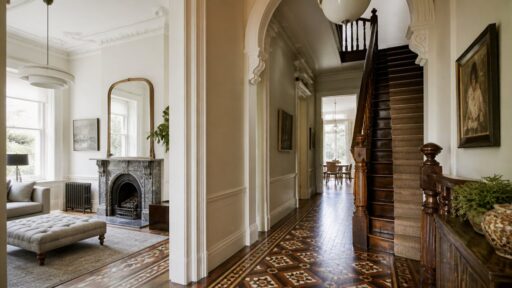
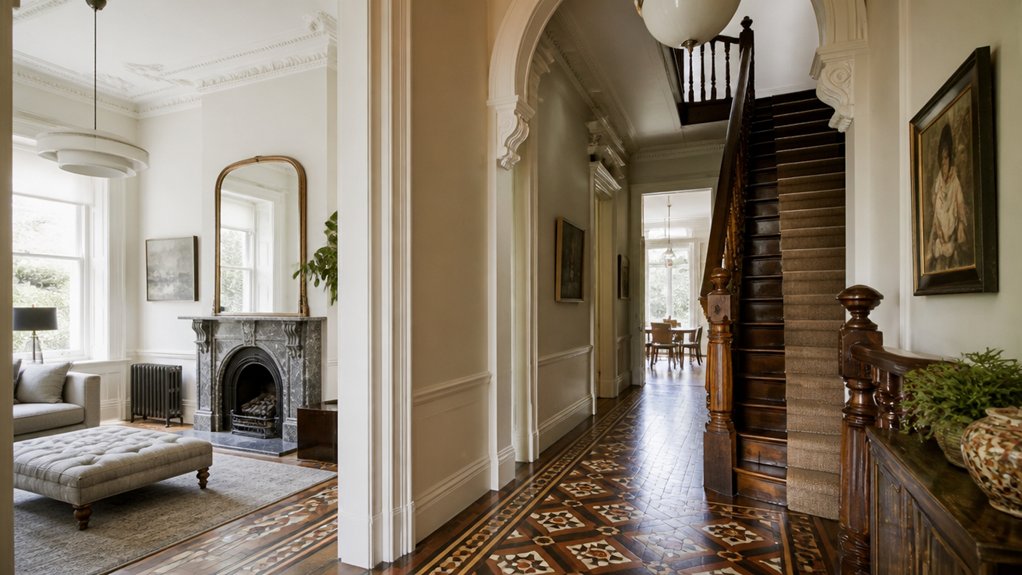

When you buy or renovate a Victorian home, original details can do more than add visual appeal—they can set your property apart and support its long-term value. Cornices, sash windows, encaustic tile, fireplaces, and stained glass showcase craftsmanship that modern replacements rarely match. Careful restoration can also cost less than removing and rebuilding these features. But not every upgrade preserves their value. The choices you make next can determine whether period character becomes a genuine selling advantage.
Victorian Cornices and Ceiling Roses Add Period Elegance
Original cornices and ceiling roses do more than decorate Victorian rooms. They frame high ceilings, emphasize period proportions, and give a home a sense of authenticity. Preserving these details can strengthen a property’s period appeal without major structural changes. A careful cornices critique can help determine whether the plasterwork needs repair, specialist restoration, or simply a fresh coat of paint.
Understanding ceiling roses history can also help you choose lighting that suits the room’s scale and original character. Buyers often notice craftsmanship during viewings, so intact details can help a home stand out. Prioritize authentic repairs; mismatched replacements may undermine the cohesive look that supports a property’s perceived value.
Original Sash Windows Bring Light and Character
Original sash windows can brighten your rooms and help you make the most of natural light without costly structural changes. Preserving their glazing bars, timber frames, and working mechanisms retains authentic detail and supports long-term value. These features give your Victorian home distinctive character that modern replacements can’t replicate.
Maximising Natural Light
How can you brighten a Victorian home without sacrificing its character? Make the most of original sash windows: clear glass and slim frames can bring natural light deeper into a room while preserving period proportions. Keep window areas clear, choose pale wall colors, and place mirrors opposite windows to reflect daylight into darker corners. Use lighter wood finishes and reflective surfaces thoughtfully instead of relying on costly structural changes.
Before altering any openings, observe how sunlight moves through your home at different times of day.
These practical choices can make rooms feel larger and more inviting, boosting buyer appeal without compromising the architecture.
Preserving Original Details
The same sash windows that brighten a Victorian home also preserve its proportions and period character. Before replacing them, assess their condition. Sound wood frames can often be repaired, preserving original craftsmanship and helping control costs. A specialist can inspect the joints, glazing, cords, and signs of decay, then recommend targeted repairs instead of full replacement. Historical paint analysis may reveal earlier finishes and help guide sensitive restoration. If any sections need replacing, careful wood selection can help match the species, grain, and durability of the original.
Preserving serviceable sashes protects the home’s architectural character and avoids unnecessary waste. It also helps retain the home’s original features, which some buyers may value when comparing period properties.
Enhancing Period Character
Well-proportioned sash windows bring natural light deep into Victorian rooms while preserving the tall, balanced look that gives these homes their character. Where possible, keep the original frames to retain period details and avoid unnecessary replacement costs. Improve performance with targeted upgrades:
- Repair cords, pulleys, and joints so windows open smoothly and close more tightly.
- Add discreet weatherstripping or secondary glazing to reduce drafts and heat loss while retaining historic profiles.
- Coordinate window upgrades with a smart home retrofit, using unobtrusive controls to manage comfort and energy use.
Clean glass also keeps views of the landscaping clear, helping rooms feel brighter and more connected to the outdoors. Thoughtful maintenance preserves authenticity and can make your property more appealing to buyers.
Encaustic Tiles Make Hallways Stand Out
A patterned encaustic tile hallway can give a Victorian home a memorable first impression. Choose tiles that suit the home’s age and color palette, and keep decor simple so the floor remains the focal point. Repeating patterns add period character and create a welcoming entrance that reflects care and authenticity.
Before installation, check the subfloor and choose a durable finish for everyday foot traffic. Poor installation can detract from the result, so consider working with an experienced professional.
A cohesive, well-maintained hallway can enhance your home’s appeal without requiring costly structural changes.
Original Fireplaces Create a Striking Focal Point
Few features anchor a Victorian room like an original fireplace. Its craftsmanship creates an immediate focal point, and preserving its period character can help maintain buyer appeal. Start with these steps:
- Have the surround, grate, and chimney assessed before committing to restoration. A qualified professional can identify safety concerns and help you plan the work.
- Compare repair and replacement options, considering materials, labor, and any specialist services required.
- Source period-appropriate tiles or ironwork for missing pieces so repairs suit the home’s age and finish.
A well-restored fireplace can make a room feel distinctive and ready to enjoy. Keep records of completed work to give prospective buyers useful information and support your asking price.
Panelled Doors and Staircases Showcase Craftsmanship
Original woodwork offers an immediate glimpse into the quality and care of a Victorian home. Look closely at paneled door profiles to appreciate the proportions and joinery that set period craftsmanship apart. Elegant staircase details can add character and appeal to buyers who value authentic features.
Original Timber Detailing
While high ceilings and decorative plaster draw the eye, carefully crafted timber details give Victorian interiors much of their lasting character. Original woodwork connects rooms, guides movement, and signals quality. When assessing a property, look beyond surface polish to the condition and continuity of its timber features. Well-maintained details can support a home’s period character and help avoid unnecessary replacements.
- Check stair rails, newel posts, and balusters for secure joints and original finishes.
- Look for consistent skirting boards, architraves, and window surrounds that frame each room.
- Preserve sound timber. Repair damaged sections with compatible materials to protect the home’s character and value.
Panelled Door Profiles
How can you spot craftsmanship in a Victorian home? Look closely at paneled doors: crisp moldings, balanced proportions, and carefully joined rails reveal the skill behind their design. These details strengthen a period property’s character and can appeal to buyers seeking authentic features. You may also notice craftsmanship in the staircase’s precise woodwork and considered finishes, which connect rooms without competing with the doors.
Well-maintained sash windows can bring in natural light that highlights the doors’ depth and texture. Preserve original profiles where possible; thoughtful restoration protects architectural integrity and supports lasting appeal, rather than replacing distinctive details with generic alternatives.
Elegant Staircase Features
An elegant staircase can turn a Victorian hallway into a defining feature. Carved newel posts, shaped handrails, and finely turned balusters showcase the craftsmanship found in paneled doors. Preserving original details strengthens your home’s period character and gives buyers a tangible reason to appreciate it.
- Inspect the structure: Check the treads, fasteners, and rails. Repair any movement before refinishing.
- Restore selectively: Keep sound wood, match missing parts, and choose finishes that show the grain.
- Plan the setting: Coordinate colors with paneled doors, porch railings, and hallway trim.
You can also reduce staircase noise by securing loose boards and adding discreet damping beneath the treads. This helps balance authentic appeal with everyday comfort.
Stained Glass Adds Colour and Heritage Charm
Few Victorian details make an entrance as memorable as stained glass. It adds color, craftsmanship, and heritage character to a period home. In a front door, landing window, or interior panel, stained glass filters daylight into shifting patterns, creating a distinctive feature that feels both practical and personal.
Choose designs that suit your home’s age and color palette. Jewel tones can complement ceiling details, while floral motifs can echo roses in other period finishes. If original glass remains, protect it with careful maintenance and specialist repairs. If it’s missing, a well-designed replacement can restore visual continuity without overwhelming the room or blocking too much natural light.
How Do Victorian Features Affect Property Value?
Victorian features can increase a property’s appeal and, in the right market, support a higher value by setting it apart from less distinctive homes. Their impact depends on condition, local buyer demand, and comparable sales, so review the evidence before pricing in a premium.
- Distinctive details: Original fireplaces, stained glass, and decorative cornices can strengthen period appeal and help a listing stand out.
- Buyer priorities: In areas where buyers value character, well-preserved features may support stronger offers and help a home sell sooner.
- Cost and risk: Restoration needs can offset potential gains if buyers anticipate costly work. Account for the property’s condition when estimating value.
To assess a Victorian home’s value, compare it with similar local sales and weigh each feature’s appeal against its maintenance and restoration costs.
How Can You Restore Period Details Without Losing Them?
How can you restore period details without losing the character that makes them valuable? Start with a careful survey: photograph original features, identify materials, and document damage before work begins. Prioritize repairs over replacement; a skilled carpenter may be able to save a sash window or carved molding rather than replace it with a replica. Choose compatible materials and preserve signs of age instead of making historic surfaces look artificially new. Get quotes from specialists, set aside a contingency, and phase nonurgent work to manage costs. Check local preservation rules before altering protected features. These steps help retain authenticity, control costs, and preserve the details buyers value.
Conclusion
Victorian details are more than decoration—they give a home a distinctive sense of character. Preserve features such as cornices, sash windows, tilework, fireplaces, and original woodwork to maintain the craftsmanship buyers appreciate and let natural light shine through. Choose thoughtful repairs over unnecessary replacement, and your period property can honor its heritage without feeling stuck in the past. Well-maintained original features may strengthen buyer appeal and help support a smoother sale, showing how care for the past can add lasting value.